I began drafting this post roughly eight months ago, while submersed in a life of foreign living. Speaking broken Italian, living a simple life in a small town nestled up to Venice, Italy. Of course, if I had my life perfectly in order, I would have had this blog out months ago, when I indeed still resided abroad. Yet, here we are, nearly six months repatriated living back in States, and two moves since. Better late than never, they say. If you have followed along our nomadic life you should be pretty familiar with the wheres and the whys. If you are new here, welcome! All the details have been narrated in my previous (Italian living) blogs, which you can find here: The Detour & The Italian Way. This blog is a bit different than most, it is a little less personal and more of perspective piece. Life as an outsider. Our Euro-era if you will, surrendering while un-learning our American ways.
From experience, there is no rule book to living abroad as a foreigner, you just kind of get thrown into it and hope to figure it all out — some of it anyway. And if at first you don’t succeed, try, try again. Most importantly, go slow and remember you are the visitor. Tried as I may have, to blend in wearing my oversized sunnies, ditching athleisure for “real clothes,” donning skirts frequently (on bike rides to pick up the babe, even.) I traded lattes for un caffè and even dabbled in shopping at the local markets, all the things—- yet, I {we} stood out, indefinitely, and thats okay! Face it, you’re a tourist, even if you tell them otherwise.
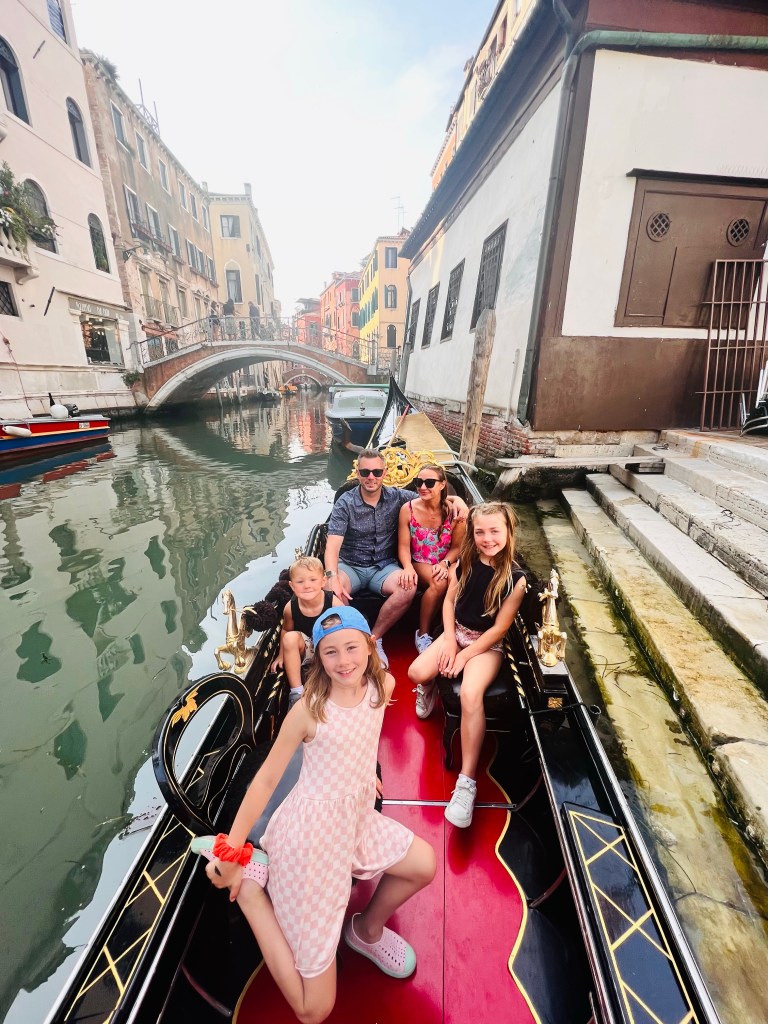
We’re no strangers to starting anew. We’ve embraced the opportunity to live in different cities, states, and even countries every few years. This time however, was perhaps the hardest of all– we faced the challenge of building our lives from the ground up. Everything was entirely unfamiliar, the bureaucracy, the rules, the language, the food and to be frank, the convenience. It was ALL foreign. Italy is a vibe of course, a culture so rooted in generational family customs and traditions much different from what we are attune to. Though, the country is small, it is very diverse, with 20 distinct regions complete with their own unique foods, practices, and various levels of autonomy within government. Interestingly too, the Italian language has many sub-sects and dialects of their own– whilst you become familiar with the countries language, it may not always translate to understanding Venetian slang, Neapolitan slang and so on. This goes for food as well, just as you may have heard amazing things about pasta Carbonara or the famous Italian tiramisu does not imply you will find this in your region. It takes time and patience to figure this all out. Challenges aside, we set out on this adventure with open minds and full intentions to make it a positive experience. After months of dedicated language training, immersing ourselves in the local culture, foreign connections within the community, and thoroughly exploring our new city, we slowly transitioned from being “foreigners” to being welcomed as “The American, locals” in this delightful suburb of Venice, we were lucky to call, home. (ill, happily take that.) This experience has unquestionably made a significant impact on our lives and we are forever changed by it.
One of the most common questions I was asked over and over from people about our time spent in Italy is, “what was your day-to-day like?” I think most people are genuinely intrigued by what normalcy looks like in an Italian city. A completely valid, yet loaded question. Until living here, I couldn’t even imagine what it’s like to live in Europe, let alone Italy, among the most vibrant and ritualistic people. We all have ideas, of course — pasta making, espresso sipping, sun basking — but there is so much more. That’s where I come in, offering a real-life, inside, unbiased look. Perhaps even, you will learn a few things about this fascinating and beautiful culture.
{Authors note: These are simply my interpretations and may not be true of all of Italy. Each region has their own way of life, their own dialect, their own ways of being. I have learned these ways of life by interactions with our neighbors, friends and local workers. I learned by sitting in cafes, walking the piazza, and living amongst the Venetian culture.}
Let’s dive in.
Monday (Lunedì).
It’s a slow start for most on Monday. It doesn’t have the “Monday hustle, take the bull by the horns” attitude like back in the States. The opposite really. It’s more of an ease in, some shops may not even be open on Monday. Each establishment typically has one day of closure, Sunday being most common. Albeit, some may choose to close Monday or Tuesday (pay attention to this) depending on their own needs and offerings. It’s important to note, workers (at most) establishment’s run a single shift. The same people whom open and run the morning shift will be the same people whom will come back to run the dinner/ aperitivo evening shift. With a mid-day break “Ripossa” (more on this later.} This staff will also be the same staff all week. For us, the Americans had become quite friendly with many workers around town because of this.
Tips & Tidbits 1: Opening/Closing: Shops typically open at 8/9 am, with some bars (coffee shops) opening earlier to cater to early risers. However, this practice is less common. No 5 am drive thru Starbucks if you get my drift. Afternoon closures “ripossa” usually occurs between 1:30-4:00, depending on the establishment, such as: restaurants, post offices, banks, or boutiques. Each will have distinct reopening hours after the mid-day close. Adapting to the multitude of different opening and closing times can be challenging, so flexibility is key (and relying on Google is not advisable). As a general rule, local shops and city offices tend to reopen around 3:30. However, restaurants typically do not reopen until 7 pm, as per local custom.
Back to it. It is now 8:30 in the morning, bars (again, coffee not pubs) are bustling with patrons, the counters are lined shoulder to shoulder at points. In Italy coffee culture undoubtably is taken very seriously and the cornerstone of Italian culture. They are loyalists when it comes to their preferred bar– no fancy or showy coffee bars either, some are very simple and unsuspecting– luckily brilliant coffee is plentiful and frills are not needed. Most bars are equipped with top of the line machines and highly experienced baristas. The traditional ‘Italian caffè’ (a shot of espresso) is the preferred drink and what you will typically see most people savoring at the bar or post meals. Macchiato, cappuccino and caffè lungo are close runners up. Italians are uncomplicated when it comes to their coffee, unlike Americans who have upwards of 50 flavors to choose from, a multitude of milk choices and sizes Italians would gasp over, it is simply not the case here.
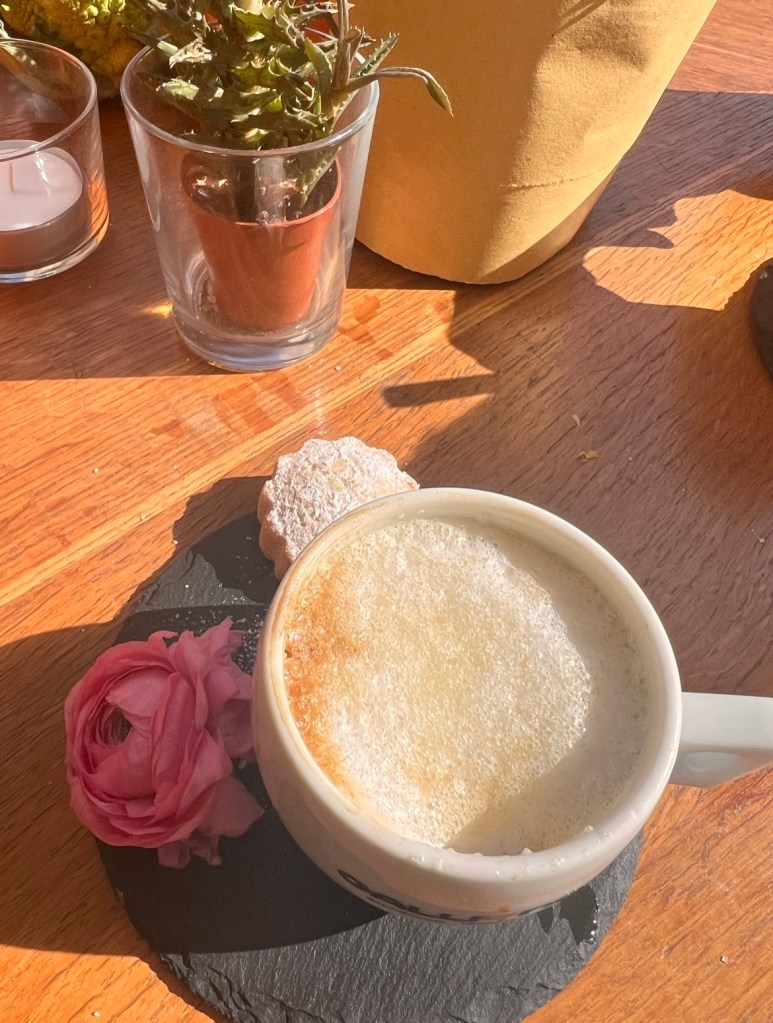
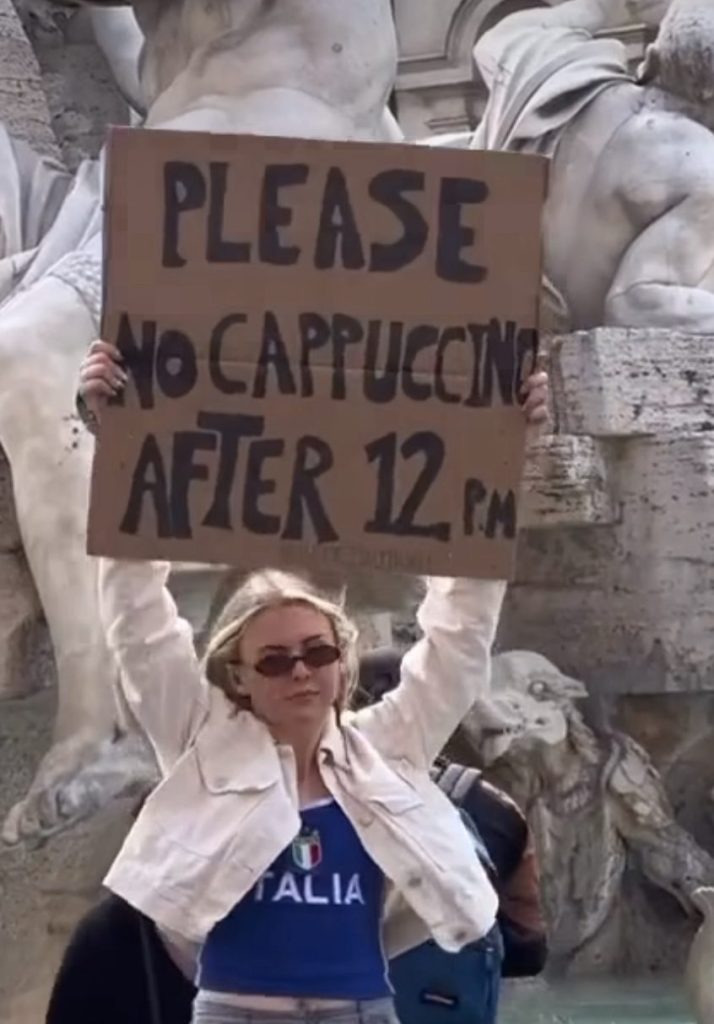
Fun fact: Social media influencers love to post cute quips about the faux pas of no Cappuccino after 12 but is this actually true? Technically they are not wrong. Cappuccino is said to be a “breakfast coffee” the first coffee of the day, and often paired with your morning brioche or cornetto. Heavy milk-based drinks musn’t be consumed after 11am as it may interfere with digestion thus impacting how you enjoy your lunch, and that is not a risk they wish to take. But, if you want a cap’ after 11, have one! They won’t refuse you; they may just subtly judge you 🤭. Oh well. Così è la vita!
Tips and Tidbits 2: There are two ways to have your coffee in Italy, al banco (at the counter), which is most common, and in fact slightly cheaper. This is where you will order and stand at the counter, sip your coffee and be on your way. If you choose to sit alla tavola (at the table) the rates can vary depending on the location you are (ie. town center, Venice proper, or a side street cafe) however this will be of course be accompanied with table service. Typically those who wish to have an Italian breakfast, a cornetto (Italian croissants/ sweet pastry) and cappuccino they will sit at the table and take their time. Truth be told, I could go on and on about Italian coffee culture. If if you are interested, i’d be happy to do a separate post on this if I get enough encouragement. Ordering and drinking coffee in Italy has many sorts of rules and “ faux pas” There is a lot to learn here, not to mention and extensive history of how coffee came to be in Italy.
After coffee break its off to work or school for some, you’ll see both men and women donning their beautifully crafted suits, dresses, and of course perfectly paired Italian leather shoes and bags. (No yoga pants to be seen, literally!) As for the rest of the town-goers, typically La Nonna (Grandmother) or La Momma (Mother) will be seen walking or biking through town running her errands getting the preparations for lunch and dinner that day. She too is dressed impeccably and hair perfectly quaffed for her day in town.
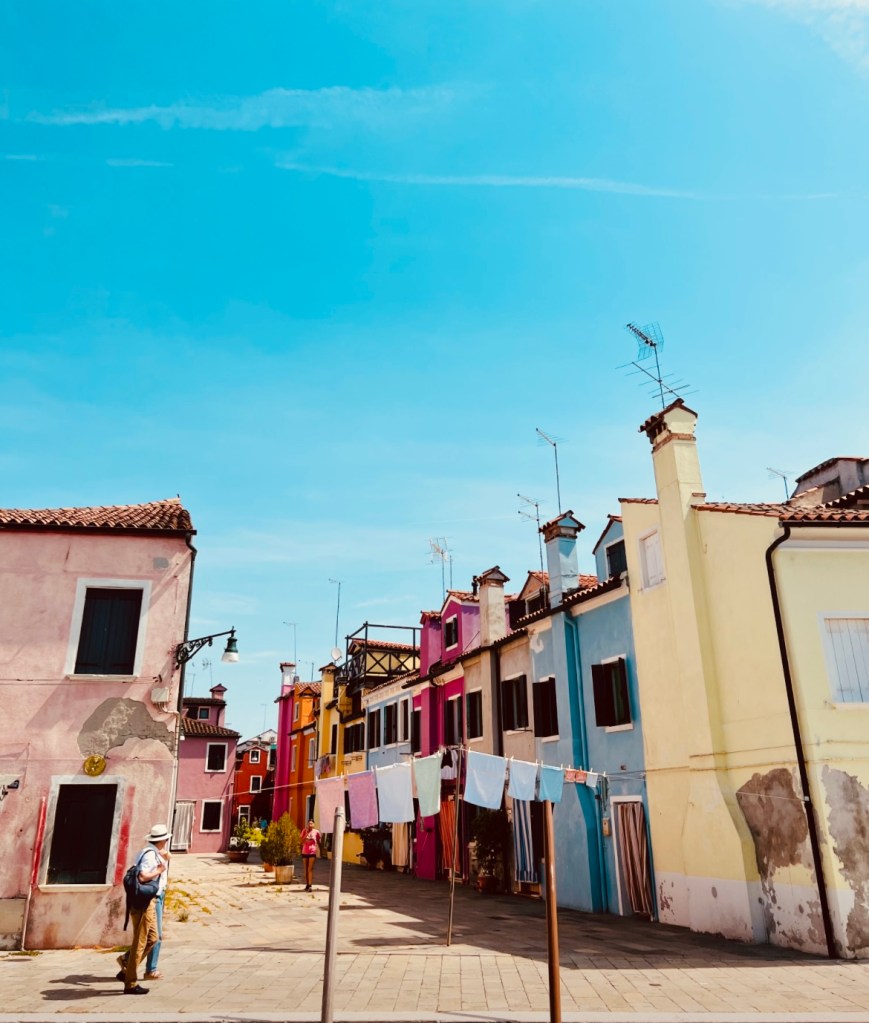
Around 2pm all is quiet. Most gates are drawn closed and not many pedestrians are out and about. This is ripossa or siesta, as we say. Because, as mentioned most establishments only have one staff, this is the time for them to go home, have lunch, visit with family and have a quick rest before heading back to work for the rest of the day. Mid day you will also see that it is laundry time. The sun is usually out at its peak warmth so you will see everyone dangling from their apartment windows clipping their wet clothing to the lines.
Bongiorno, its laundry day!
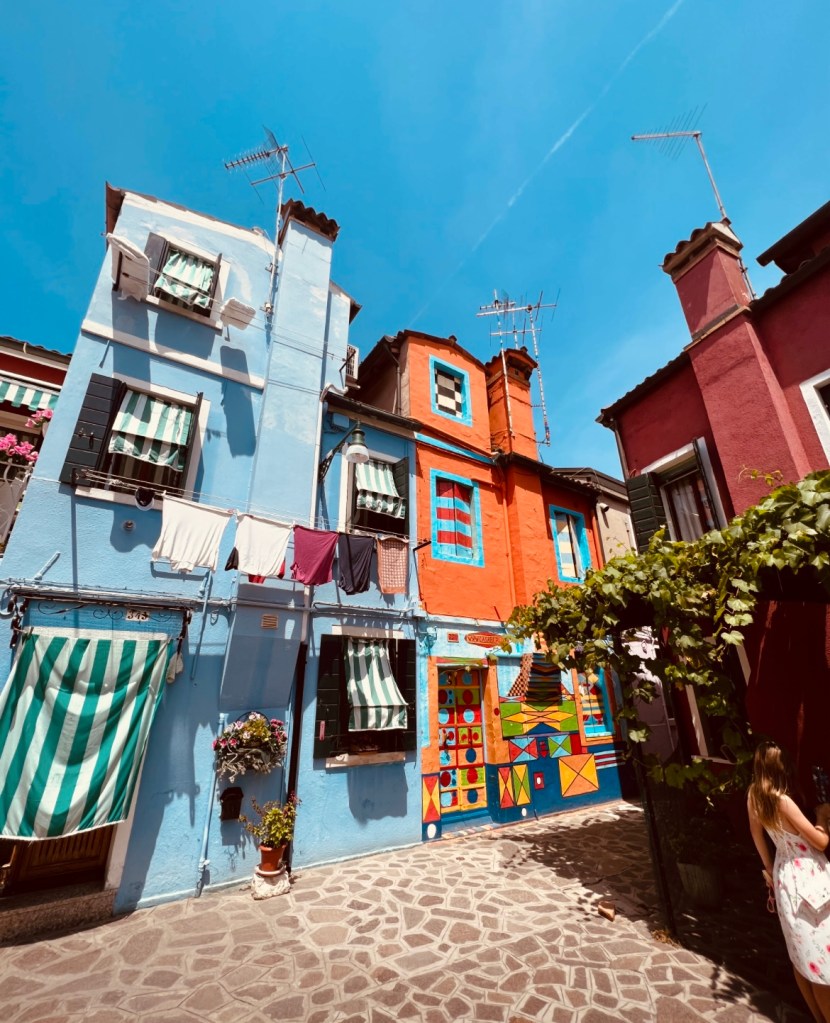
By 4pm children begin to sprawl out within the square and streets as they shuffle out of the primary and middle schools. The bars are lightly sprinkled with those enjoying their second or third caffè of the day, while workers are prepping for the evening cocktail and dinner crowds that are about ensue.
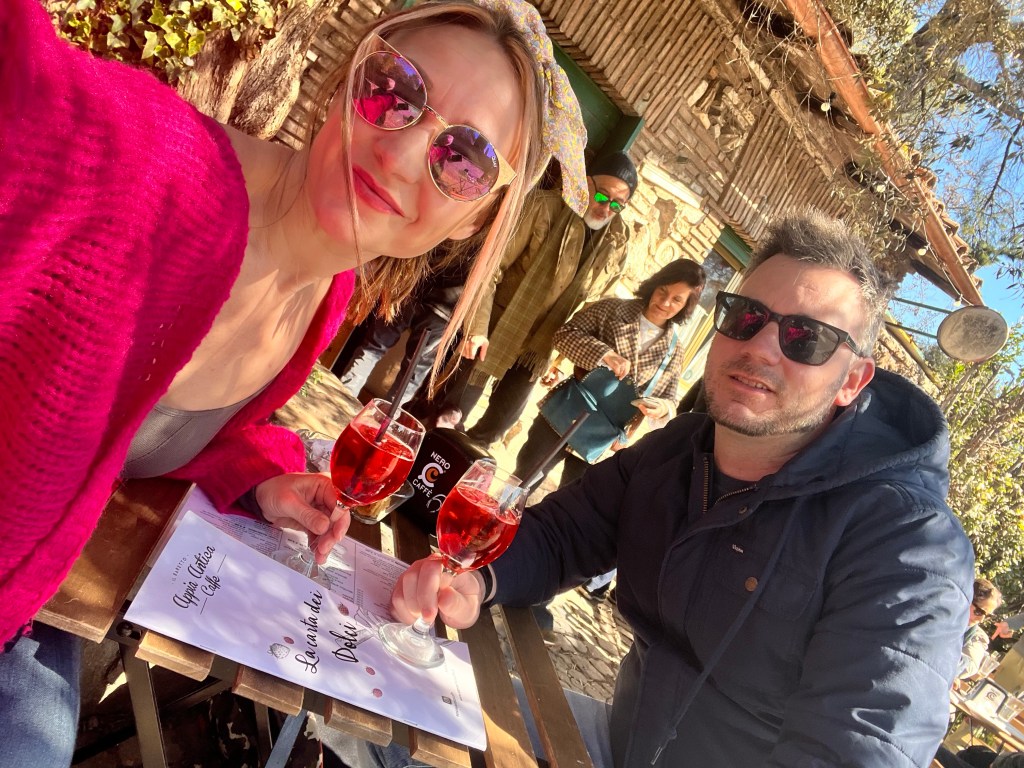
5-6PM there is a new buzz on the streets– It’s aperitivo time! Italians flood to the town square to drink an apertif cocktail, (think happy hour– but much more ceremonial, especially in Northern Italy). Aperitif is an alcoholic (or non) bitter cocktail that preps and “excites the palate” for dinner. Sometimes even consumed in the morning or before lunch. Usually consisting of a bitter drink like an Aperol, Campari, or Negroni to name a few. This is a time to catch up with coworkers post work, chit-chat with friends and hang with family, a social hour indeed. Veneto regions take it step further and provide you with a (usually free) bowl of potato chips, olives or even samples of Venetien “cicchetti.” Which is small bread slices with various meats, fish or cheeses on top! It’s also great way to curb the hunger for that 9pm dinner ;). Aperitivo is an ancient Italian tradition and should most definitely be experienced! Cin-Cin! Salute!
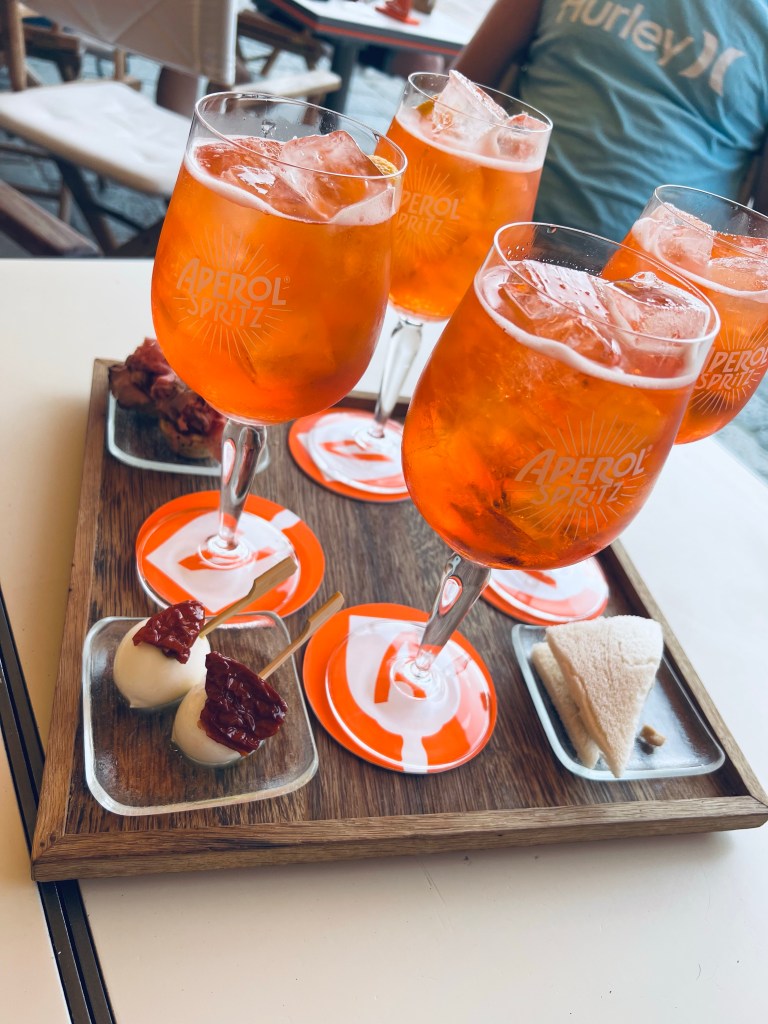
8pm. Dinner time. To me, it’s divided between home cooked meals and dinners out. Restaurants are always packed, so in my own observations, many Italians cook a big home cooked pasta and meat dish for lunch and enjoy dinner out. Sometimes aperitivo snacks would be a sufficient “dinner” as well as they tend to eat lighter for dinner, as I have come to learn.
Tuesday- (Martidi)
Tuesday is much like any typical day in Italy. Businesses are open, school is in session, a bit more buzz around the streets. Bars are still lined with patrons grabbing a quick caffè before hitting the clock, 1 pm lunch goers are sitting down enjoying their handmade, Neapolitan style pizzas or fresh pasta dishes.
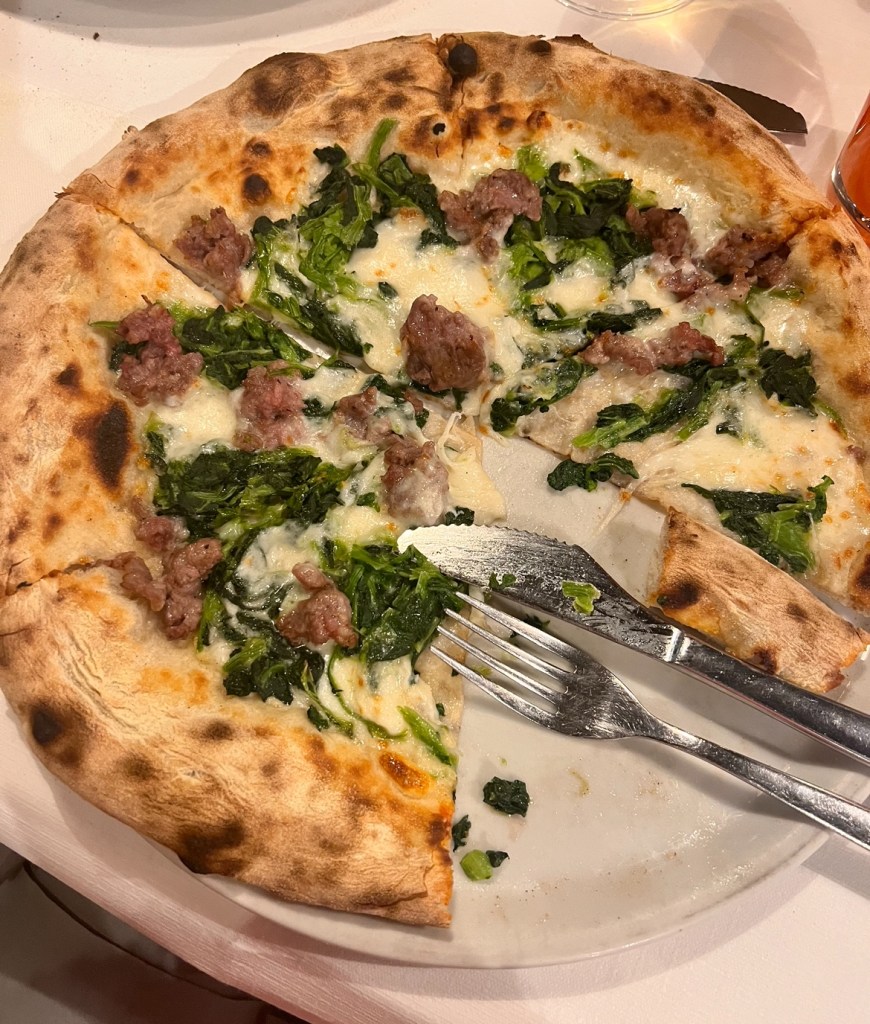
Tips and Tidbits 3: Pizza is not meant to be shared {this is why they are never served cut} it is perfectly reasonable for a bone-thin, elderly woman to enjoy an entire pizza (with a fork, never hands of course) by herself. A couple glasses of wine is also perfectly reasonable mid-day to pair with said meal. Strolls around town (mom and daughter linked arm and arm) is typically followed as they discuss what is for dinner and perhaps a swing by the fresh market if needed .
Wednesday- (Mercoledì)
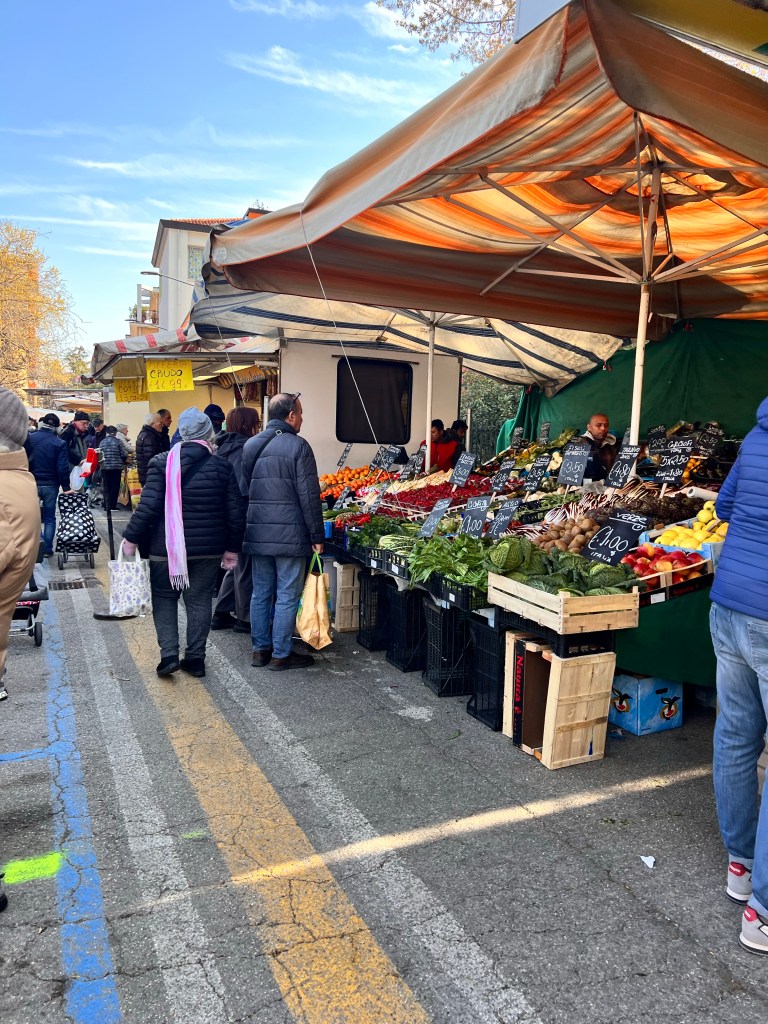
It’s market day! This is an experience you must not miss. As you make your way into town square you will find lines of Vans stretched along the streets for miles, with colorful awnings shading the vendors eager to offer goods such as delicious cured meats and fresh veggies to vibrant flowers. You can also find shoes of all styles, housewares and racks of affordable stylish clothing. The aromas wafting through the air are simply irresistible, filled with the scent of freshly baked sweet breads– It’s heaven! The market is bustling with activity, it’s important to keep your eyes casted forward or you may find yourself being run over by enthusiastic elderly folks maneuvering their shopping carts through the crowds. Market day is a time-honored tradition, a lively affair and must certainly worth the visit. Many towns across the country host “Il Mercati” just as this, in fact each municipality typically has their own version of market each week. Supermarkets of course are becoming main stays more recently in Italy, however the Mercati appeal remains true due to quality goods, farm fresh produce and fair values. Let me not forget to mention an enticing excuse to gather and socialize.
Thursday – (Giovedì)
Nothing out of the ordinary happens today, so I want bore you with fluff.
Friday – (Venardí):
It’s the end of the week! We’ve all been anticipating this moment, there’s a sense of ease in the air– everyone is enthusiastic about kicking off the weekend. Market Day 2 is bustling with activity, the wine shops are lively, and fresh flowers adorn the arms of many town-goers. Cyclists of all ages are moseying through town, baskets filled with bread, wine, and cheese for weekend aperitifs. Everyone is ready to bask in the sunshine, relax and indulge in all their social affairs. Preparations for dinner in the piazza with your best friends are underway or perhaps a celebration of a that special birthday at the local wine bar, Italians socialites are not ones to shy from a Prosecco cheers to good health and the weekend. As I have come to witness, hosting does not seem to rank among Italian customs, family affairs aside of course. It is most common practice for group gatherings and social affairs to take place outside of the home in restaurants, bars and local event spaces.
Tips and Tidbits 4: Italians are expert multitaskers when it comes to cycling. You’ll frequently see them chatting on the phone (always) and smoking while riding. It’s also not uncommon to witness them carrying six bags of groceries on their bikes, with a toddler on the back and another in the front. You’ll even spot VERY elderly men and women effortlessly navigating their bicycles. Bicycles play a significant role in transportation and undoubtedly contribute to the Italians’ slimness, health and longevity. Bravo, Italy, Bravo!
Saturday- (Sabato):
As I have come to learn, Italians are more homebodies. It is not uncommon for multi-generations of family members to reside under one roof, all caring for one another. Everything they need is within the comforts of their own home, so why leave? They don’t jam their weekends full of schedules, and activities or travels like we are accustomed to back in the states. Their weekends are meant to slow down, visit with friends and family. Dinners are drawn out and there is a true sense of “il dolce far niente”- the sweetness of doing nothing. They are tending their gardens, walking to the park and if the sun is out, you will find men and women outside with their faces to the sun, soaking in all the goodness and energy the sun brings (their words, not mine). I think this is why they are such long-living, happy people. They have so much of that good vitamin D and know the importance of slowing down 🙃– just a thought. On the contrary, within the summer months, this may be different– it is commonplace to travel with family or plan multi-week long stays at their second ‘family-shared’ homes in the mountains or at the sea.
Sunday – (Domenica)
Sunday revolves around Church and Family. Church bells echo through the city walls (the chime timing forever bewildered me?)– It’s Sundays best as the masses flock to the numerous Churches scattered across the city. Afterward, it’s a visit to the bar for a caffé and then off to La Momma’s house for a family lunch filled with homemade pasta and wine. Family is truly at the heart of it all. Interestingly, it’s the one guaranteed day off for students (many high schools have Saturday classes) so Sunday becomes a cherished day for spending time with family and nurturing those connections.
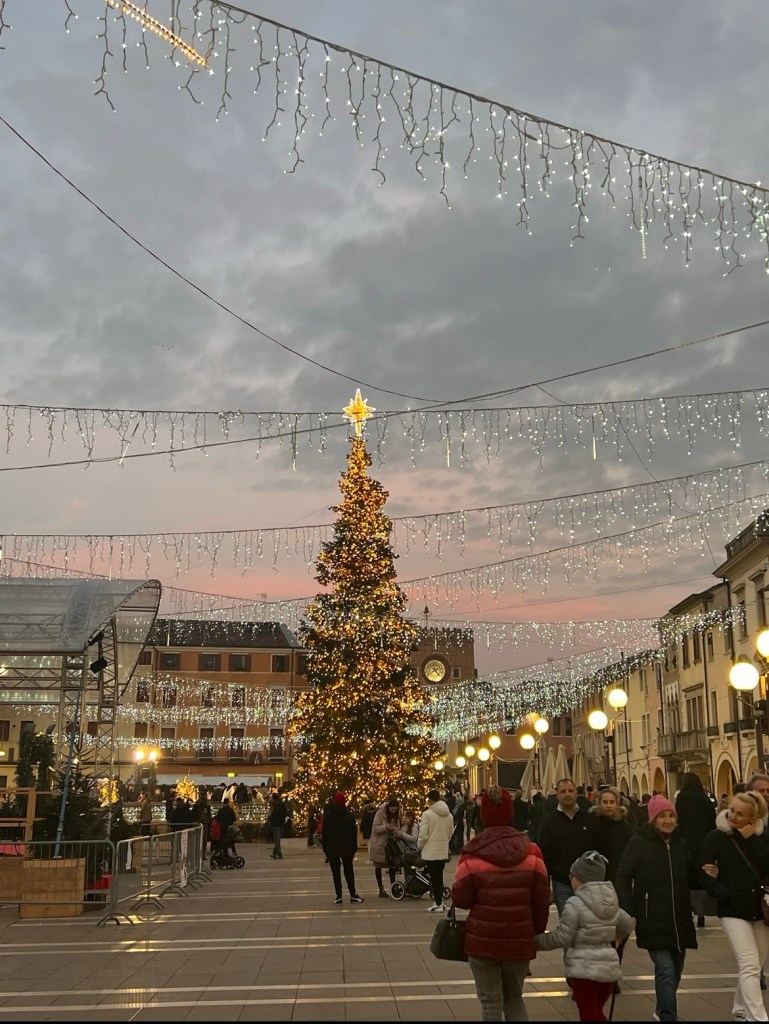
Of course, this brings me to the end of the week, a week in my town, where we were embraced by people who cherish time and relationships. A town who giggled along with me when I mistook words like pesce for pesca when ordering gelato (fish vs peach, big difference.) They welcomed us even as we showed up to elaborate birthdays in shorts and casuals, as they were wearing their wardrobes top designer fashions. Where they spotted us around town and waved, they knew our orders as we walked through the door. Where food and connection is the soul of their being. A town whom relishes any reason to gather for festivals and parties that always stretch into the late evening. Neighbors and friends whom always have a Spritz ready for you if you drop by unannounced. They act as surrogate grandparents– ever eager to play and engage with our kids. It was broken English-Italian conversation that we laugh and struggle through willingly, because its important. Our small town of Mestre, welcomed us as foreigners and made us feel like part of the family. Here, we have formed enduring friendships with individuals from all walks of life, and we will forever appreciate our time spent here. Thank you Italy for hosting us, we are grateful, and humbled by your simplicity and effortless beauty all around.
One last thing: Just as i’ve expressed over and over in previous blogs about moving or visiting new countries or cities for that matter, I encourage you to take a step back and listen, learn. Do not try to impose your own agenda and beliefs. Do NOT mock their culture, or insist your way is better, this will only outcast you and you will never truly learn to appreciate the differences of humanity and purpose. We are not the same, nor should we be the same, our histories and ancestors stories are much different, so embrace the uncomfortable. This is what makes life beautiful and rich, lean in to the unknown. As always, keep adventuring, keep seeking that sunshine state of mind.
Humbly, thank you for reading and stay tuned!
.
 sunshinestateofmine